Welcome: Wenzhou Meilian Pump&Valve Co,.Ltd
Language:
 ∷
∷

∷
 ∷
∷
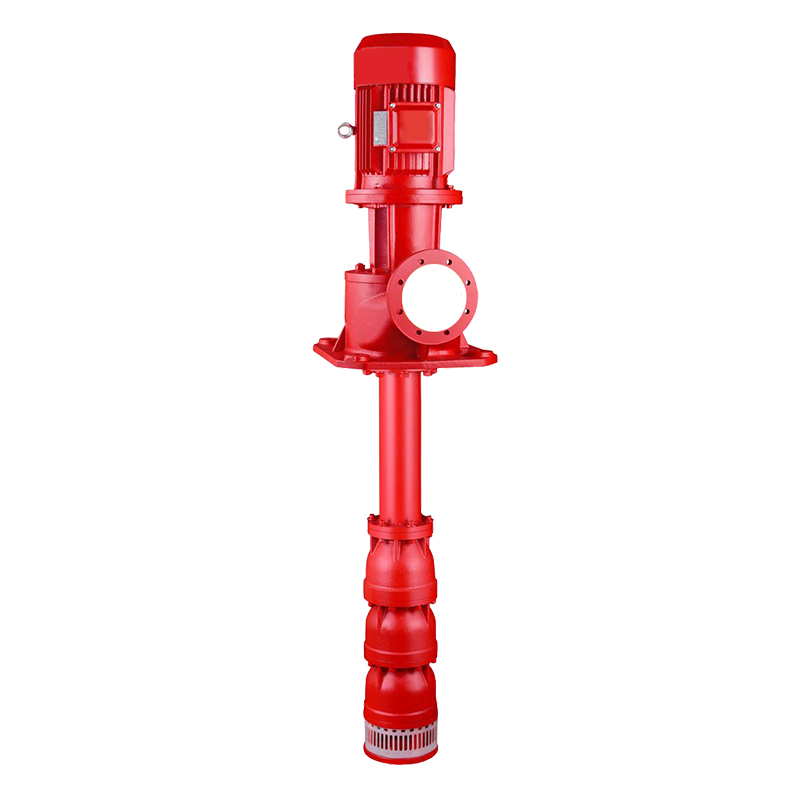
A Vertical Turbine Fire Pump is a specialized centrifugal pump designed for fire protection systems. It is vertically installed, with the driver (electric motor or diesel engine) located above ground and the pump bowls (impeller stages) submerged in a water source. Its primary purpose is to provide reliable, high-pressure water supply for fire suppression in scenarios where the water source is below ground level, such as wells, underground tanks, or open bodies of water.
Driver: Typically an electric motor or diesel engine mounted above ground.
Discharge Head: Contains the discharge outlet, driver mounting flange, and necessary controls.
Column Pipe: A vertical shaft assembly that transmits power from the driver to the pump bowls and channels water upward.
Pump Bowls (Stages): Multi-stage impellers enclosed in diffuser bowls, submerged in the water source. Each stage increases water pressure.
Suction Strainer: Prevents debris from entering the pump.
Shaft & Bearings: A long vertical shaft with intermediate bearings for stability and alignment.
The pump operates by converting rotational energy from the driver into hydraulic energy. As the impellers rotate, they create centrifugal force, drawing water through the suction strainer and progressively increasing pressure through each stage. The pressurized water then flows up the column pipe and out through the discharge head into the fire protection system (e.g., sprinklers, hydrants).
High-rise buildings requiring high-pressure water supply.
Industrial facilities with underground water storage.
Municipal fire protection systems drawing from wells or reservoirs.
Remote locations without reliable municipal water supply.
Offshore platforms or coastal facilities using seawater.
Efficient for Deep Water Sources: Can lift water from significant depths (up to hundreds of feet).
Space-Saving: Vertical design minimizes footprint, ideal for confined spaces.
Reliable Pressure Output: Multi-stage design ensures consistent high pressure.
Versatile Installation: Can be installed in dedicated pump houses, well pits, or outdoor settings.
Compliance: Meets standards such as NFPA 20 (Standard for the Installation of Stationary Pumps for Fire Protection) and UL/FM certifications.
NPSH (Net Positive Suction Head): Must be calculated to prevent cavitation.
Material Selection: Corrosion-resistant materials (e.g., bronze, stainless steel) for components in contact with water.
Driver Redundancy: Often paired with dual power sources (electric + diesel) for backup.
Controller: Equipped with automatic start-up upon pressure drop and manual override.
Regular inspection of lubrication, alignment, and vibration levels.
Periodic testing under load to ensure performance.
Monitoring for corrosion, wear in bearings, and seal integrity.
Keeping the suction area clear of debris.
NFPA 20: Primary standard for installation and performance in the U.S.
UL/FM Global: Third-party testing and certification for reliability.
Local Regulations: May vary by region (e.g., EN standards in Europe).
Contact: Mr Chen
Phone: +8615167713035
Tel: 0577-67198891
Email: 2332245213@qq.com
Add: